
Member Protection Center
Knowledge is your best defense against fraud. Our Member Protection Center empowers you with the tools and information you need to recognize scams, protect your accounts, and act quickly if needed.
The Latest in Fraud Protection
What is Port-Out Fraud? Warning Signs, Prevention Tips, and What to do
What is Port-Out Fraud?
Port-out Fraud is a type of identity theft that occurs when a criminal convinces a mobile phone carrier to transfer your phone number to a device they control. Once they gain access to your number, they may be able to intercept phone calls, text messages, one-time passcodes, and account verification codes intended for you.
Because many financial institutions, email providers, and online services use text messages to verify your identity, stolen phone numbers can give criminals access to sensitive accounts and personal information.
Why is Port-Out Fraud Dangerous?
Once a fraudster takes control of your phone number, they may be able to:
- Receive one-time passcodes and Secure Access Codes (SACs)
- Reset passwords on online accounts
- Access email accounts
- Take over financial accounts
- Intercept fraud alerts and security notifications
What Are the Warning Signs of Port-Out Fraud?
You may be experiencing port-out fraud if you notice:
- A sudden loss of cellular service
- Inability to make or receive phone calls
- Text messages no longer arriving
- An unexpected “No Service” message on your device
- Account activity you don’t recognize
- Notifications that account information has changed
- Password reset emails or text messages you didn’t request
If you unexpectedly lose service on your mobile device and cannot explain why, contact your wireless carrier immediately.
How Can You Protect Yourself From Port-Out Fraud?
There are several steps you can take to reduce your risk:
- Add a Carrier PIN or Port Protection Lock – Most wireless carriers allow you to add a PIN, password, or port protection lock to help prevent unauthorized number transfers.
- Use Strong, Unique Passwords – Create unique passwords for each account and avoid using information that can be easily guessed or found online.
- Enable Multifactor Authentication (MFA) Whenever possible, use multifactor authentication. Authenticator apps may provide stronger protection than text-message verification alone.
- Monitor Your Accounts – Review your financial accounts, email accounts, and online services regularly for suspicious activity.
What Should You Do If You Become a Victim of Port-Out Fraud?
If you believe your phone number has been transferred without your permission:
- Contact your wireless carrier immediately and request that your number be restored to your device.
- Change passwords for your email, financial, and other important accounts.
- Contact your financial institution and report the incident.
- Monitor your credit and account alerts.
- Report the incident to the FBI’s Internet Crime Complaint Center (IC3) at https://www.ic3.gov.
Think You’ve Been Scammed?
If something doesn’t seem right, contact us right away at 402-334-7000. We’re here to help you review your accounts, take steps to protect your information, and talk through your options. The sooner you reach out, the sooner we can help.
Fraud Awareness and Education
As your trusted financial partner, our responsibility is to educate members of our community about fraud and identity theft, and how to prevent it. Below is information to help you stay vigilant against fraudsters and scammers.
What are some common scams?
What is phishing, smishing, vishing?
How can I keep minors safe in a digital world?
How can I protect elders?
How do I protect my business?
How can I protect my identity?

A general rule of thumb to follow is if an offer seems too good to be true, it probably is. Here are a few common types of scams to be aware of:
Phishing, smishing, and vishing are types of social engineering attacks designed to entice individuals to share sensitive personal information. The difference is in how individuals are targeted. Always verify the source of messages/calls, be skeptical of unsolicited messages/calls, and enable multi-factor authentication (MFA) for all online accounts.

Today’s youth have grown up surrounded by computers, tablets, smartphones, the internet, and social media. Education is key when it comes to helping protect them while they are online. Here are some steps you can take to help ensure their safety:
- Teach them the importance and responsibility of keeping their login credentials and personal information confidential.
- Help them set their social media accounts to private.
- Let them know it’s OK to ignore texts or phone calls from unrecognized numbers and show them how to block these numbers.
- If they have a Centris Visa® Debit Card, download the Centris Debit Card Companion App to create transaction alerts, set spending limits, lock and unlock their card, and more.

According to the FBI, millions of elderly Americans fall victim to some type of financial fraud or confidence scheme. To help prevent elderly financial abuse, it is important to closely monitor and manage their finances responsibly:
- Regularly check in with elderly people in your life.
- Encourage elderly individuals to stay connected with friends, family, and community groups.
- Screen caregivers, including background checks and references.
- Regularly review bank statements and financial records for suspicious activity.
- Report suspected abuse to Adult Protective Services.

Staying vigilant is crucial for protecting your company’s financial and operational integrity. Proactive strategies like regular risk assessments can help reduce your organization’s exposure to fraudulent activities. Below is a list of common business scams:
- Business Email Compromise
- Phony Invoices
- Overpayment Scam
- Directory Scam
- Charity Pitches Scam
- Phishing
Identity theft is a serious cybercrime where unauthorized individuals exploit personal information to conduct fraudulent financial transactions or activities. Identity theft can impact individuals across all demographics and financial backgrounds. Check out our blog article, How to Protect Yourself from Identity Theft, for great tips on how to help prevent identity theft from happening to you or a loved one.
Proactively Prevent Fraud
Centris Federal Credit Union offers many ways to take control of you finances and proactively prevent fraud. Hover over each tile to learn more.

Online Banking Alerts
Debit Card Companion App

Monitor Credit Reports
Click here to download our informational flyer that provides more details on how to stay vigilant against fraudsters.
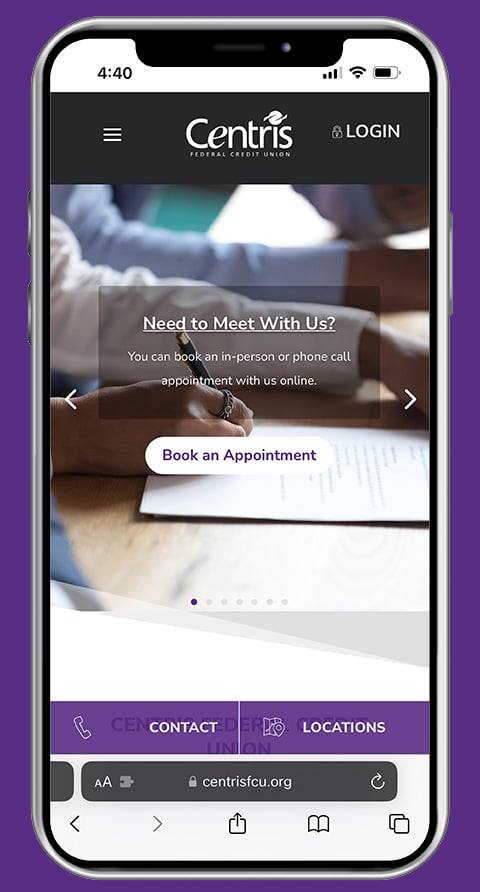
Steps to Take if You’ve Been Scammed
-
Change your online banking username and password and don’t share it with anyone.
-
If you downloaded anything from the scammer, have a professional or reputable antivirus program scan your device for malicious software.
-
Monitor your credit report and dispute fraudulent charges on your account with your financial institution.
-
Book an appointment with an expert at your financial institution.
-
If you are a Centris Visa® Debit Card holder, download the Centris Debit Card Companion App.
How will Centris contact me?
As a friendly reminder, Centris will never contact our members asking you to verify your account number, credit or debit card number, social security number, PIN, Secure Access Codes or online banking username or password. Members should take note of suspicious texts that come from unknown numbers, and that may include unformatted text with possible misspellings. These texts may also include an illegitimate link. Never click a link from an unknown sender. If someone emails, texts or calls you asking for your personal information, hang up and contact Centris immediately at 402-334-7000.
Phone
- Our Member Protection Team will reach out to a member if they believe there is risk of fraud on an account.
- We will never call and ask for sensitive personal information.
Secure Access Codes (SAC)
- SAC may be sent via text or phone call to authenticate your identity when logging into Centris online banking.
- You should never provide this code to anyone.
Debit Card
- Visa® Fraud Protection (Debit Card): If the Visa team detects suspicious activity with your debit card, they will contact you via email, phone call, and/or text.
- Their communication will never include links and will not require your account information, such as PINs or card numbers.
Text Alerts
- If you’ve enrolled in alerts through Centris mobile banking or the Centris Debit Card Companion App, you may receive text and/or email alerts.
- For these alerts, we will never ask you to click a link or provide personal information including credentials.
- If you have a loan with Centris and missed a loan payment, you may get a reminder text regarding the payment from 402-315-2650. This text will include a link to make a payment. If you have any concerns or are unsure if the text is coming from Centris Federal Credit Union, you can find the ‘Make a Payment’ link on our homepage at www.centrisfcu.org.
- If you apply for a digital loan with Centris you may receive text communications regarding your loan status from 402-697-6665.
Credit Card
- If there is potentially fraudulent activity with your credit card, Elan will call the card holder.
- They will never ask you for your card’s CVV (three-digit code on the back of the card) or issue/expiration date.
Wrong Number Text Scam: How a Simple Message Can Lead to Fraud