Spring break is just a few weeks away. Graduation season starts in three months. Summer vacation could be as close as four months away. These are the moments that matter and the stories that become your favorite to tell.
But have you planned how you will pay for them? At Centris Federal Credit Union, we know budgeting for big events can feel overwhelming. But this year, it’s your time to take the stress out of it by planning now, so you can play later.
The Cost of Waiting
Last-minute planning might feel spontaneous and exciting, but it can have unintended consequences. When you wait to book accommodations, prices can be higher, and you could miss out on experiences. When you scramble to cover graduation party expenses at the last second, you might end up putting everything on a credit card without a repayment plan or spending money from the savings you have for an emergency.
Planning ahead flips the script.
When you give yourself time, you can shop for the best prices on travel, get early-bird deals, and spread costs over multiple paychecks instead of paying all at once. Most importantly, you get the psychological benefit of knowing your budget is solid, which means you can relax and be present during these special moments.
Step 1: Identify the True Cost of Your Events
To start the planning, make a comprehensive list of every trip, celebration, and special event you anticipate spending money on. Then, it’s time to get realistic about the costs.
The obvious costs:
- Travel
- Lodging
- Meals
- Activities/Entertainment
The forgotten costs:
- Parking and tolls
- Travel insurance
- Passport application or renewal
- Possible child or pet care
- Souvenirs and gifts
- New gear you may need
- Possible international phone plans
- Sunscreen and bug spray
Consider adding a 10-15% buffer to your total to cover unexpected expenses. They add up, so including a cushion means fewer surprises to your budget.
Step 2: Create Your Savings Timeline Backwards
Now that you have an idea of what you need to save for each event or vacation, work backwards from each event or travel date to find out how many pay periods you have to save.
Then do some math. Divide the total cost of your trip or experience by the number of paychecks between now and your event.
For example, if you estimate your summer vacation will cost $2,000 and it’s five months away, you may have about 10 paychecks. That’s $200 per paycheck. When you break it down this way, a number that seemed overwhelming may suddenly seem manageable.
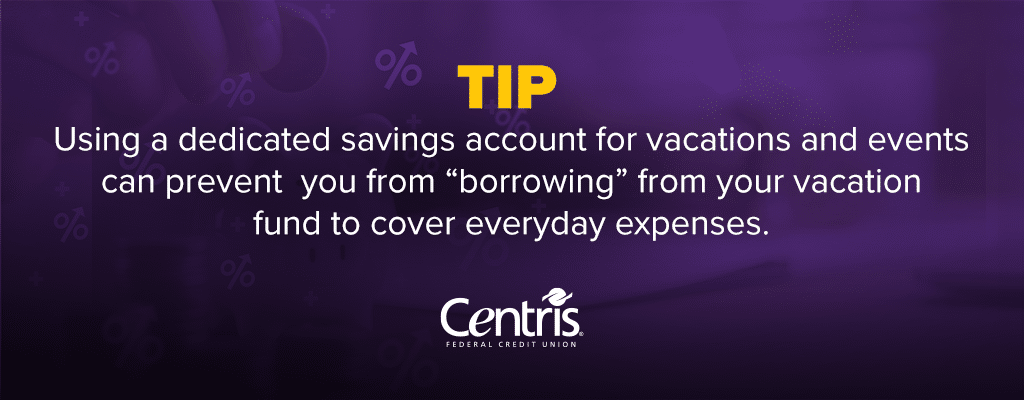
If you’re able, set up automatic transfers from your checking account to a dedicated savings account. When saving happens automatically, you’re more likely to stick to the plan.
Step 3: Find the Money and Get Creative
You know how much you need to save and how much you should put aside per paycheck. Now comes the practical question. Where does that money actually come from? Here are a few strategies to come up with the money:
- Trim spending temporarily — Pull your bank and credit card statements from the last month and look for easy cuts. That could mean pausing subscriptions, avoiding impulse purchases, or dining out a few times less. If you can trim $10 a day, that’s $300 for the month!
- Find alternative funding or income — Look for ways to boost your savings. Tax refunds may arrive just in time for many of these events. Work bonuses or overtime pay may be directed to the savings fund. Sell unused items online. Consider picking up rideshare driving or food delivery for a few months to generate extra income.
Cost-Cutting Strategies
There are many ways you can save money on travel through the planning process.
- Travel with a larger group and share rooms to reduce and split costs.
- Choose a destination off the beaten path with lower prices but similar experiences.
- Use public transportation instead of renting a car or relying on rideshares. (Bonus: if you’re a student, many cities offer discounts on public transportation with a student ID.)
- Plan meals before the trip, make a menu, and make a grocery run the day you arrive.
- Consider taking a road trip instead of flying.
- Look for free activities like city events, museums, parks, and beaches.
When Financing Makes Sense (and When It Doesn’t)
If you do the math and realize you can’t save the full amount, that’s okay. At this point, you have time to do more digging into cheaper options to reduce the budget, or if all else fails, partial savings may still reduce what you would end up financing.
Sometimes, using credit cards or taking out a loan can be part of a smart financial strategy.
Financing might be appropriate when:
- You want to lock in low travel prices now, and you have a repayment plan in place.
- You’re taking advantage of a low-percent or zero-percent financing promotion.
- You can get savings and deals that save you money through a credit card that you wouldn’t otherwise achieve.
Remember that smart financing only works if you have a plan and the discipline to pay it off.
Avoid financing when:
- You’re already carrying debt that you’re struggling to manage.
- You don’t have a realistic plan for repaying what you’re borrowing.
- The expense can be reasonably delayed until you can pay it in full without paying more.
- Taking on the debt will create financial stress that affects other areas of your life.
Consider scheduling a free financial counseling session to determine the best approach to financing your trip, whether that be savings, Money Market accounts, certificates, or even with your home’s equity.
Your Future Self Will Thank You
Planning ahead lets you fully enjoy the moments that matter without financial stress. When you’ve done the work ahead of time, you get to relax on spring break, celebrate graduations presently, and take that summer vacation carefree.
Start today, even if it feels small. Saving a few hundred or even twenty-five dollars per paycheck is better than zero. Consistent saving is more important than the amount because each dollar adds up!
Need help getting started? We’re here for you:
- Visit a Branch — Stop into one of our locations to speak with a financial expert in person.
- Give Us a Call — Reach us at (402) 334-7000 to discuss a savings path that works for you.
- Free Educational Tools — Learn budgeting and saving strategies at your own pace through the Centris Financial Wellness Center.
- Personalized Financial Counseling — Schedule a one-on-one session through GreenPath Financial Wellness for advice tailored to your situation.
Federally Insured by NCUA